Escalation in Gaza: Humanitarian Concerns and International Efforts

Published from Blogger Prime Android App

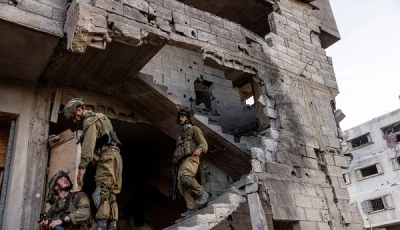
The conflict in Gaza continues to escalate, with a recent development being Israel's agreement to pause operations in northern Gaza for four hours a day. This move, announced by the White House, is seen as a respite in the month-long fighting that has claimed thousands of lives and heightened fears of a regional conflict.

The pauses, allowing people to flee along humanitarian corridors, are described as significant first steps by White House national security spokesperson John Kirby. Israeli assurance of no military operations during these pauses is a result of recent discussions between US and Israeli officials, including talks between President Joe Biden and Prime Minister Benjamin Netanyahu.

The situation on the ground remains dire, with Israeli forces inching closer to hospitals in the north of Gaza, where thousands of Palestinians are seeking refuge. Despite evacuation orders, many civilians are staying in the north, facing the challenges of ground battles and airstrikes.

In the international arena, a meeting in Paris involving officials from about 80 countries and organizations aims to coordinate humanitarian aid to Gaza and find ways to assist wounded civilians. The Norwegian Refugee Council's Jan Egeland emphasizes the urgent need for a ceasefire to prevent further loss of lives.

Simultaneously, in Doha, the heads of the CIA and Israel's Mossad intelligence agency meet with the prime minister of Qatar to discuss a possible deal over hostages, highlighting the complex diplomatic efforts amid the ongoing conflict.

As tensions persist, both sides report heavy casualties in intense street battles. The toll on civilians is evident, with the UN reporting over 10,000 Gaza residents killed, approximately 40% of them children. Basic supplies are running out, and areas are laid waste by continuous bombardments.

The international community faces the challenge of providing humanitarian aid, coordinating evacuations, and navigating delicate diplomatic negotiations. The article concludes with a stark reminder that, without a ceasefire and the lifting of the siege, the humanitarian crisis in Gaza will persist, causing further loss of innocent lives.

Comments

Popular posts from this blog

Awami National Party's Strategic Nomination of Arbab Zain Umar: A Symbol of Youth Empowerment in Khyber Pakhtunkhwa

  As the political landscape in Pakistan undergoes significant shifts, the Awami National Party (ANP) is making waves with its strategic nomination of candidates for the upcoming general elections on February 8. One name, in particular, stands out – Arbab Zain Umar, a 34-year-old businessman hailing from the esteemed Arbab family of Landi Arbab, a suburb of Peshawar. Zain Umar's candidacy for the National Assembly Constituency NA-30 reflects not only his family's political legacy but also the ANP's commitment to fostering youth participation in politics. The ANP's Dominance in Khyber Pakhtunkhwa Khyber Pakhtunkhwa, a region historically significant in the political landscape of Pakistan, has been a stronghold for the Awami National Party. The party has consistently garnered support in areas adjacent to Dara Adam Khel, the tribal belt connecting Peshawar with Kohat. This support has been instrumental in electing prominent figures such as late Arbab Muhammad Zahir Khan an...

Celebrating the Visionary Legacy of Sir Sahibzada Abdul Qayyum Khan: A Grand Commemoration at Islamia College Peshawar

  The 160th birthday celebration of the esteemed founder of Islamia College Peshawar, Sir Sahibzada Abdul Qayyum Khan, unfolded with profound reverence and grandeur. The event served as a momentous occasion, bringing together a diverse assembly of professors, officers, hostel wardens, and students, both male and female, who gathered to pay homage to the visionary leader. Under the guidance of College Provost Mian Syed Kamal, the commemoration took place at the shrine located in the ancestral house of the esteemed founder. Commencement of the Ceremony The ceremony commenced with the recitation of the Holy Quran, setting a solemn tone for the proceedings. Distinguished guests, including Maulana Khalil Ahmed, former MPA and MNA, Regional Nazim Sahibzada Ejaz (grandson of the college founder), and other members of his family, graced the occasion. President of Topi Awami Jirga Muhammad Rahim Jadoon, along with regional dignitaries and relatives of Sahibzada Sahib, officially inaugurated...

Unpacking the Senate's Resolution: Balancing National Security and Constitutional Principles"

  The recent resolution passed by the Senate challenging the Supreme Court's decision on military trials for civilians involved in the May 9 attacks has sparked a multifaceted debate. This resolution, presented by Senator Dilawar Khan, has raised significant questions about the delicate balance between national security imperatives, constitutional principles, and the rule of law. Judicial Independence vs. Legislative Authority: The resolution contends that the Supreme Court's decision "impinges upon the legislative authority of parliament," signaling a clash between the judiciary and the legislature. However, it is crucial to underscore that the judiciary's role is to interpret and ensure the constitutionality of laws. By declaring military trials of civilians unconstitutional, the Supreme Court exercised its mandate to safeguard the principles enshrined in the constitution. Military Courts and Due Process: The argument in the resolution that the invalidation of...